2010-07-24


首先,我的电脑只能打简体字。
Today's schedule included a visit to the 国立台湾事前文化博物馆 (National Museum of Prehistory) in 台东 (Taitung), 小鸟不要来琉璃珠 (a handicrafts shop that makes glass beads and other traditional art), lunch, a four hour ride to 台南 (Tainan), and dinner at Tainan.
I found the museum to be quite interesting as it solidified my understanding of Taiwan's geology and flora and fauna. The story of Taiwan's native forests parallels that of Hawaii, with the native vegetation in lower areas destroyed by human activity, leaving the higher, wetter areas partially intact. I also didn't know that Taiwan was colonized by large mammals during the Ice Age and that Taiwanese mammoths once existed.
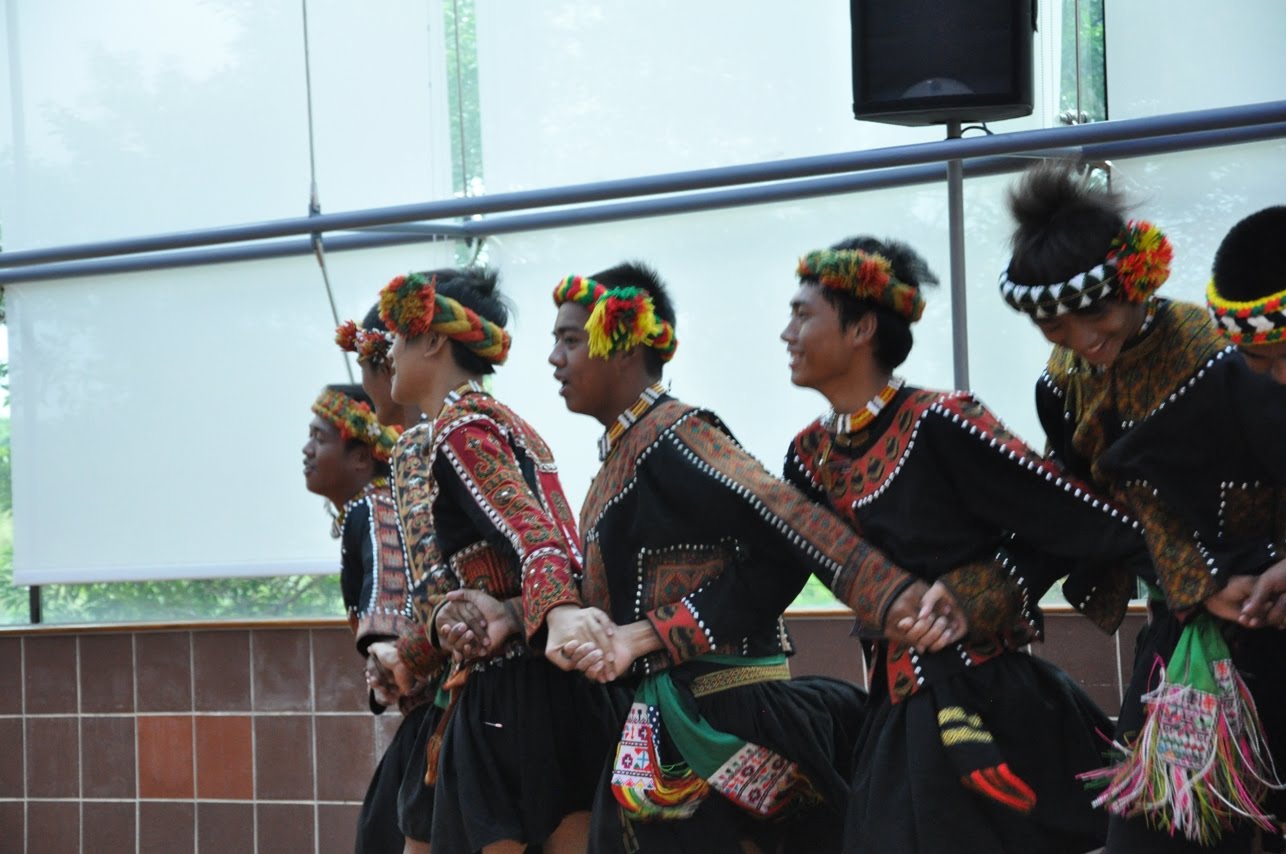
I appreciated learning about Taiwan's aboriginal cultures in more depth at the museum than I had learned from watching the performances we saw earlier. It was interesting that we saw three different aboriginal dance performances during this trip, because each of them was performed by different ethnic groups and under different circumstances. As far as I can tell, the first was part of a commercial enterprise (the hotel), the second was organized to help aboriginal youths learn and not to showcase aboriginal art, and the third was organized to showcase aboriginal art (and presumably is a class the performers joined). I wish I could have asked the performers how they came to perform and what their opinion of performing because they are of aboriginal descent is . In a way, I wonder how they approach their identity as one of the aboriginal tribes. I could tell that most were proud to belong to their ethnic group, like the man at the hotel who showed us how to find flying squirrels using eyeshine. At the same time, Stanley Yen told the story of aboriginal youths who needed help to get motivation to improve their lives. (I hope I got the story of the 宝抱鼓队之鼓动青春 right.)


The glass-bead shop was interesting, but I didn't feel like buying anything and so decided to salvage my time by observing what kinds of patterns and colors the artists used.

The ride to Tainan was a long trip and everyone seemed tired, as this photo suggests.


Dinner tonight occurred at a roadside restaurant which had on display various marine invertebrates and mammalian organs. While such a display may incur disgust in a Western restaurant, it served as an attraction here. I liked the food, mainly because I always like seafood.

(All pictures have been shrunken from the originals.)

The Last Day in Taitung Eleanor

Today, we left Taitung for Tainan, and our last station in Taitung was National Museum of Prehistory. Though, I’m a Taiwanese, yet I’ve never been this museum before. Hence, I treasured this opportunity very much, and listened carefully to the audio guides. Through the guides, I finally understood that I just knew little about Taiwan, but the visit to Prehistory Museum gave me the chance to get to know authentic Taiwan. Not only did I know the process of Taiwan Island’s birth but also those different aboriginal’s specific customs and traits.
In the past, I would think those cultures as unbelievable and weird customs. However, through the short introduction, I understood those habits and customs really mean something to their tribes and the Taiwan indigenous society. During the journey to the museum, the most touching part was the aboriginal dancing and singing performance. They showed their customs and traditions in the performance, which was simple but powerful. Those big smiles on their faces were the sign of their greeting to visitors. The performance showed not only their energy but also their spirit which was touching to the heart.

OCAC 23 Jul 2010 | Simon Chen

From an interesting night stay at 花蓮布洛灣 with the impressive post-dinner performances, it was an early start to yet another tiring day. The first leg of the trip, interrupted by a quick photo shoot at the 東西橫貫公路 was a two hour bus ride that took various country scenery and landscapes - most notably the continuous mountain ranges. The road was straight and flat, and was honestly best enjoyed by a snooze.

After the two hour trip, we finally arrived at 花東秀姑巒溪, famous for its quick streams for white-water rafting (泛舟). We geared up with some heavy duty lifejackets and then hit the water. Initially, the water was clam and slow so we just paddled gracefully and enjoyed the massive stone cliffs on both sides of the river. But it was when we encountered our first fast stream that we realised how fun rafting could be. It was fast! It was wet! It was fun! With the occasional confrontation with other groups' boats and those in speedboats which invariably resulted in lots of splashes of water, we got through the first half of the paddling and was awarded with a lunch break. Second half was much the same with much more intense water splashes but ended up being pulled by the speed boats most of the way. It was still great though,

At night, we were very lucky to have 嚴長壽 to give us a little speech about his own success story. The philosophy of giving everything a go and being open to more options while not confined by what others think we should do was truly an inspiration. So overall, it was another day rich in Taiwanese-大自然 and culture.

White-water rafting in a foreign country? Check.

So this blog is actually for Friday, July 23rd....but we were all so busy celebrating Aden's 19th birthday and Kristine's 23rd birthday that I didn't have time to post it until now :)

Friday's most adventurous and most memorable event would probably be considered the white-water rafting on Siouguluan River. The majority of the people in the program haven't done this before, so it was very exciting for everyone. We split into four boats since each boat held eight to ten people. After getting adorned in water shoes, vest, and helmet, we went over safety and instructions, and then we were off in the water!

The waves and rapids were not as frequent as I would have liked, but they still did a good job of tossing our boats around and stirring up some screams and laughs. What caused even more noise from all the boats were the water fights among each other. As soon as one boat would drift closer to another one, there would be paddles and pails of water flinging, showering, and splashing water in the air at each other, without fail. A pail full of water dumped down your neck? Yeppers. A spray of water right into your face from a nearby opponent's paddle? You got it.

The exchanged attacks were relentless throughout the entire 4-hour ride down the river. One good thing about the constant splatter of water in the air was that it kept everyone nice and cool from the burning hot rays of the sun. Yet, this was also misleading to the amount of sun we all got, since later that day, every single person had pink arms and thighs. Lesson of the trip? We're all one boat and in it together; it takes every paddle to be rowing--and rowing together, that is, in a synchronized manner--in order to sail through the water. Lesson number two would be how to properly hold and launch the pail of water at the correct angle so that the water was actually reaching its intended target, and not the rest of your boat-mates (Most Improved Player goes to Luke!).

I'll wrap up the rest of the day real quickly. After rafting we were all pretty hungry from all the paddling and water fights so we picked up a quick snack of steamed bun with pork. Heading to dinner, we were in Yin-jie's part of town, and I was getting pretty excited for this restaurant with oyster noodle soup that she said was really good. Just one little problem... upon arriving into town, the restaurant was gone! So our alternative dinner option was McDonald's. Once we got in all 34 orders of burgers, fries, and McFlurries, we attended the He Hong-qi's and Taiwan Drum Crops' Youth performance. The aboriginal drummers not only held a good beat, but also danced with spirit and sang with beauty and pride. After that, we heard a mini seminar/lecture from Stanley Yen that was very inspirational, encouraging us to go out into the world and make a change based on whatever we're passionate about. Onward we go!

(Pictures to be uploaded later, as soon as we get a strong Internet connection)

2010-07-23

原住民原动力,源自何方?

彷如胡德夫常说的:
Standing on my land (站在自己的土地)
I feel like a stranger(我像个陌生人)

这片土地的主人,像是长在土地的千年根基,却找不到立足的土凷,
这不是命运,反而是无法运作自己的生命。

来自比西里岸阿美族部落的【寶抱鼓隊】,由部落一群小孩組成的樂隊。鼓聲中,孩子的節奏流淌在血脈裡,清脆的歌聲,像無瑕的原音,在律動裡鼓動着希望。

原住民,原动力,需要为而不有的有心人,更需要自力更生...

White Water Rafting!!!!

Today was a fun day with exciting and inspiring activities. White water rafting was filled with intense yet friendly water fight between members of different boats. I really enjoyed the competitive atmosphere between the different groups but not so much the physical exertion required to move the boat between the exciting parts of the trip.

The drumming performance given by the teacher and young student group are really impressive. It gives me a different perspective to music; before coming to the trip I was more used to listening to the western jazz style of drumming. However after watching the performance I realized how interesting and awe-inspiring Taiwanese Aboriginal style of drumming can be, I will definitely pay more attention to it in the future.

The final activity of the day was the inspirational speech by Stanley Yen. He really changed my perspective on passion and how to live life to its fullest. His speech leaves me with many things to think about in my own life. Today is definitely a day I would never forget.

Entre el amor y la emoción


嚴長壽,一位致力於保存和推展台灣文化的人物,傳奇性的英雄故事和有著一顆熱愛台真誠赤熱的心,是台灣文化發展重要的推手之一。在公益和文化當中他讓人感受到「一點點的愛、一點點的感動」,這樣些藝術文化才得以延續。


不管是個人、社會甚至到國家,都應該去加強他的文化素養及重視傳統的文化,但是現今的教育卻不是如此,而連我們身為台灣人都不去重視這個部分的話,那文化傳統要如何保存,如何走向世界國際,這樣怎麼還會有機會讓其他的人認識台灣,認同台灣呢?